
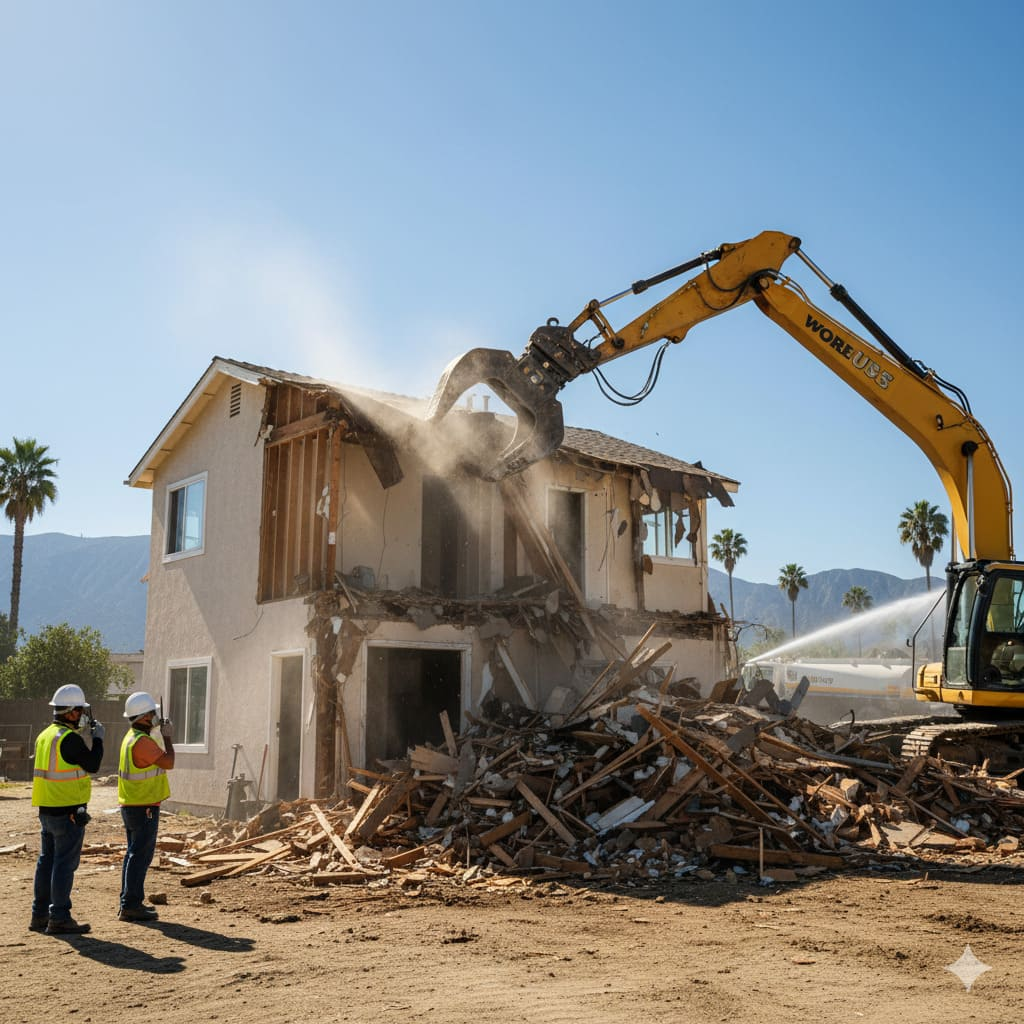
Demolition 101 for Home Projects in 2025
Your Newport Beach Backyard oasis Awaits ADU, Deck, Patios, Fencing & Turf Get a Free Qoute Table of Contents Table
In any construction project, we build from the ground up. The framing (the skeleton) we often discuss needs something solid to stand on. That “something” is the foundation.
A home’s foundation has one primary job: to transfer the entire weight (or “load”) of the building safely and evenly onto the ground.
At GAGA US Construction, we view the foundation as the non-negotiable starting point of a home’s longevity. A small mistake here can compromise the entire structure. Whether we are working on a custom build in Manhattan Beach or an addition in Torrance, the soil conditions in the South Bay vary, but the requirement for a solid base remains the same.
Let’s dig into the basics every homeowner should know about what lies beneath their floorboards.
The type of foundation your house has largely depends on when it was built and the specific soil conditions of your lot. In the South Bay, you will most commonly encounter two types.
This is the standard for most modern homes and ADUs we build today. A slab-on-grade foundation is exactly what it sounds like: a single, thick “slab” of concrete poured directly onto a prepared base of soil and gravel.
How GAGA builds it: The edges of the slab are thickened (called “footings”) to support the load-bearing exterior walls. The rest of the slab forms the floor for your entire ground level.
Pros: It provides a very stable base, which is excellent for the sandy soil often found in coastal areas.
Cons: Plumbing and electrical conduits are embedded in the concrete. This means a leak under the slab can be a major repair.
Common in older South Bay homes (especially pre-1980s builds in Redondo or Hermosa), a raised foundation consists of a continuous concrete “perimeter wall” with a “crawl space” underneath the house.
How it works: The perimeter wall rests on a wide concrete footing buried in the ground. Interior support is provided by “posts and piers.”
Pros: Easy access! All your plumbing, ductwork, and electrical can be accessed from the crawl space, making upgrades much simpler.
Cons: The marine layer and coastal humidity can make crawl spaces prone to moisture and mold if not properly ventilated. Older raised foundations also require seismic retrofitting to be safe in an earthquake (more on this below).
This is where many DIYers and “handyman” builders get it wrong. A deck is a heavy structure that needs its own foundation, distinct from your house.
At GAGA US Construction, we treat a deck with the same structural seriousness as a room addition. You cannot simply rest it on blocks.
A footing is a concrete “pillar” that we pour into a hole dug deep into the ground. Its job is to anchor the deck and prevent it from heaving or sinking.
The Critical Mistakes We Fix We are often called to fix failing decks in the South Bay. The problem is almost always a bad foundation. Here is how we avoid that:
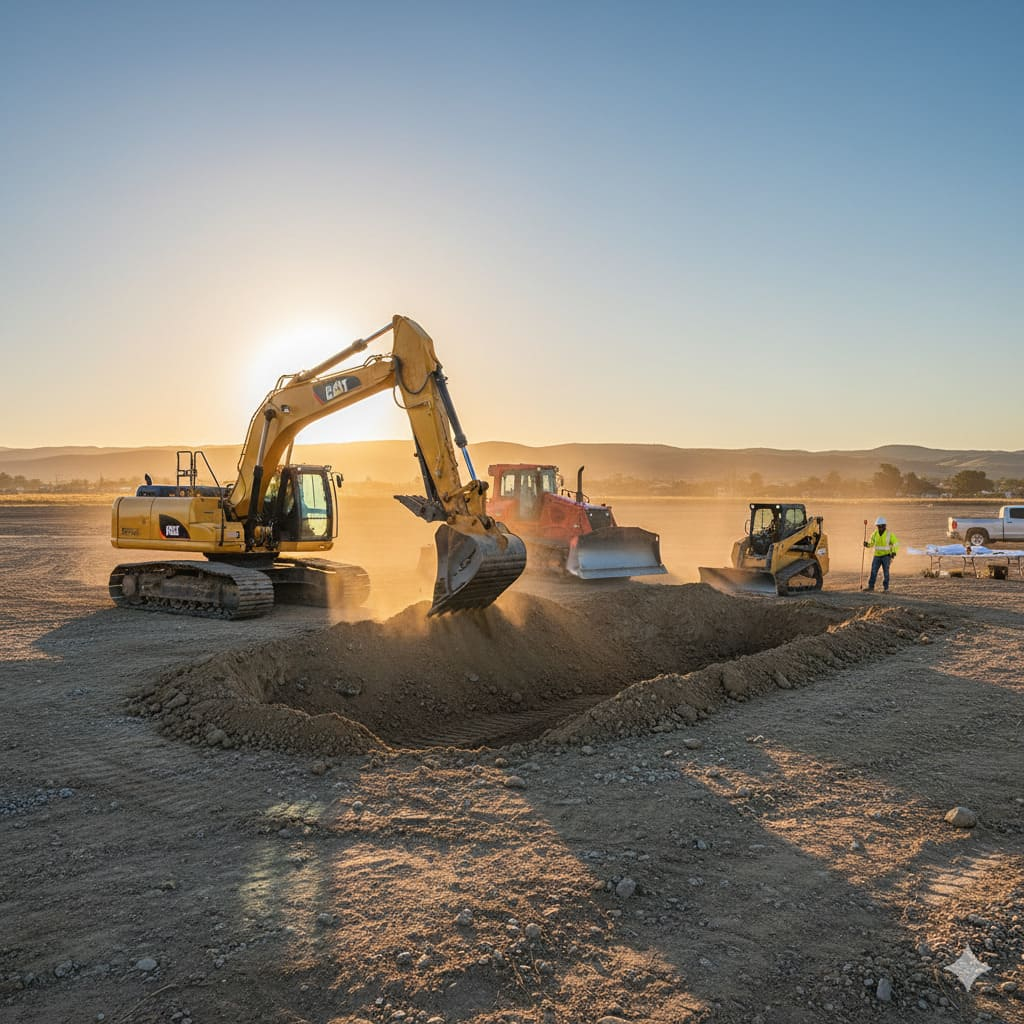
Digging to Undisturbed Soil: You can’t just dig past the grass. We dig through the loose topsoil until we hit the hard, compacted subsoil (often 18-24 inches deep). If you build on loose soil, your deck will sink.
No Wood-to-Soil Contact: This is a fatal flaw, especially with our coastal moisture. We never bury wooden posts directly in concrete or dirt. The moisture will wick up and rot the post from the inside out.
The Proper Method: We pour the concrete footing so it sits a few inches above the soil grade. We embed a metal post bracket (like a Simpson Strong-Tie) into the wet concrete. The wooden post sits in this bracket, holding it high, dry, and secure.
Your home will give you warning signs if its foundation is failing. Given the shifting nature of clay and sandy soils in our region, don’t ignore these red flags:
Cracks in Walls: Look for large, diagonal (“stair-step”) cracks in exterior stucco or interior drywall, especially around door and window frames.
Sticking Doors: A door that suddenly starts jamming at the top or dragging on the floor is a classic sign that the house is “racking,” or settling unevenly.
Sloping Floors: If you drop a marble and it consistently rolls to one side of the room, you have a settling issue.
Cracks in the Slab: Visible cracks in your garage floor or on any exposed concrete slab should be monitored.
If you see these signs, call GAGA US Construction. We can assess whether it’s a minor cosmetic issue or a structural structural concern.
Q: What is “settling”? Is it normal? A: “Uniform settling” is normal. This is when the entire house sinks evenly into the soil over the first few years. “Differential settling” is the problem. This is when one part of the house sinks faster than another (common in hillside homes in Palos Verdes or San Pedro), which pulls the structure apart.
Q: Do I need a permit for deck footings in the South Bay? A: Almost always, yes. whether you are in Torrance, Manhattan Beach, or Hawthorne, local building departments require a permit for decks. This includes an inspection of footing holes before pouring concrete to ensure they are deep enough. GAGA handles all permitting for you.
Q: My house has a raised foundation. Should I be worried about earthquakes? A: If your home was built before 1980 and hasn’t been retrofitted, you should have it inspected. Seismic retrofitting involves bolting the house frame to the concrete foundation and bracing the “cripple walls” of the crawl space. It is one of the most effective safety upgrades you can make in California.
Your home’s foundation is its most important structural element. It’s the firm base that everything else relies on.
Understanding the basics—whether for your main house or a new deck—helps you make smarter decisions. When you choose GAGA US Construction for your South Bay project, you aren’t just getting a builder; you’re getting a partner who ensures your property is safe, stable, and built to last for generations.
Your Newport Beach Backyard oasis Awaits ADU, Deck, Patios, Fencing & Turf Get a Free Qoute Table of Contents Table
Your Newport Beach Backyard oasis Awaits ADU, Deck, Patios, Fencing & Turf Get a Free Qoute Table of Contents Table
Your Newport Beach Backyard oasis Awaits ADU, Deck, Patios, Fencing & Turf Get a Free Qoute Table of Contents Table

GAGA US INC is a licensed (#1074874 – B, C13) General Building Contractor based in Los Angeles. GAGA US works with professional contractors to ensure your construction needs are fully met and executed promptly.