
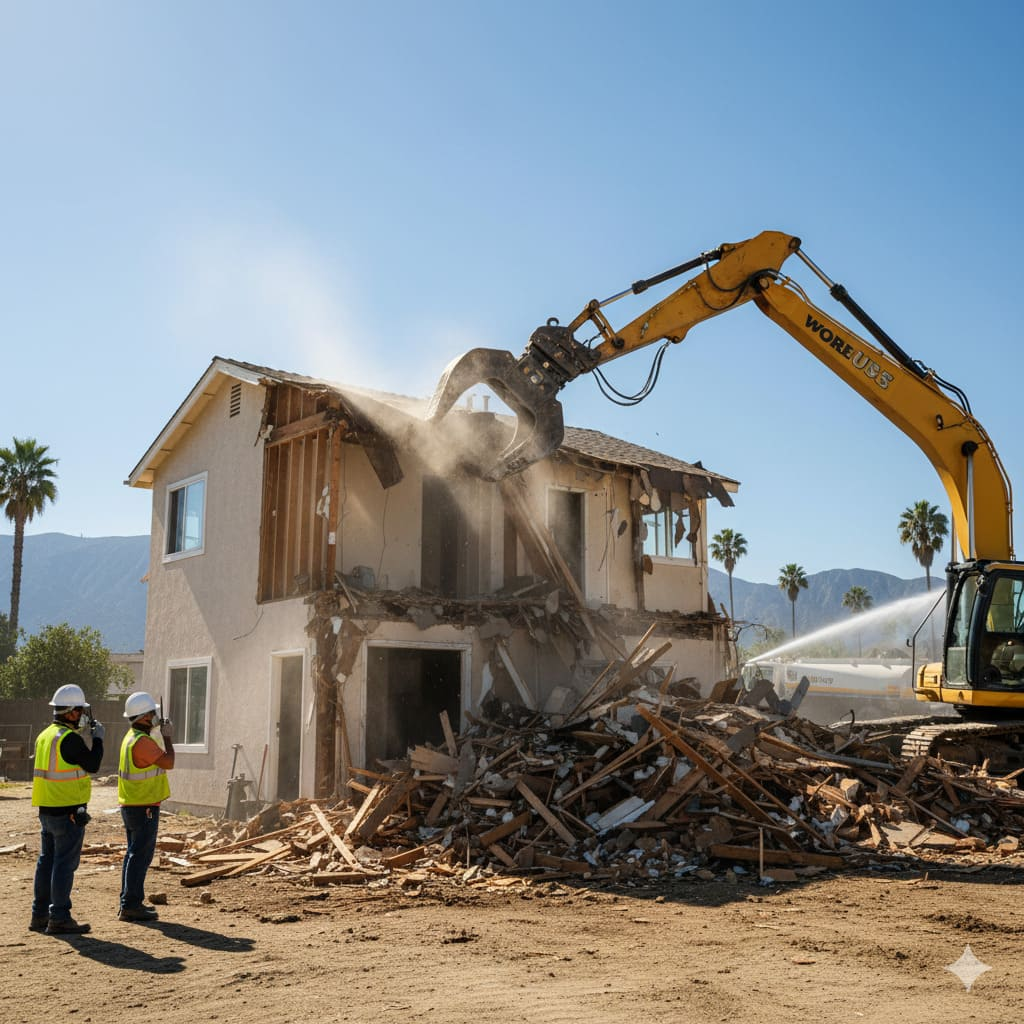
Demolition 101 for Home Projects in 2025
Your Newport Beach Backyard oasis Awaits ADU, Deck, Patios, Fencing & Turf Get a Free Qoute Table of Contents Table
A paver patio or driveway is the ultimate upgrade for a South Bay home. Whether you are replacing a cracked concrete driveway in Torrance or building a modern entertainment deck in Manhattan Beach, pavers offer an elegance and durability that asphalt simply cannot match.
But I’ve seen it happen a hundred times: A homeowner spends a fortune on beautiful, high-end pavers, only to watch their new patio turn into a lumpy, sinking, weed-filled mess in just two years.
Why does this happen?
It’s rarely the paver’s fault. The problem is the base.
When you search for “paver installation near me,” you aren’t just hiring someone to lay pretty stones. You are hiring them to build the 10-inch-deep engineering system that lives under those stones.
As a lead hardscape contractor at GAGA US Construction, I can tell you this: The base preparation is 80% of the job. The pavers are just the 20% you see.
Here is the professional, 7-step process we use to guarantee a paver project lasts for decades, specifically tailored for the soil conditions of Southern California.
Think of your driveway or patio like an iceberg. The beautiful pavers you walk on are just the tip. The massive, structural strength lies hidden beneath the surface. If that hidden section is weak, the tip will sink.
Amateur contractors or “low-bid” handymen often skip Steps 2, 3, and 5 to save money on labor and materials. This is exactly what separates a 2-year patio from a 30-year patio.
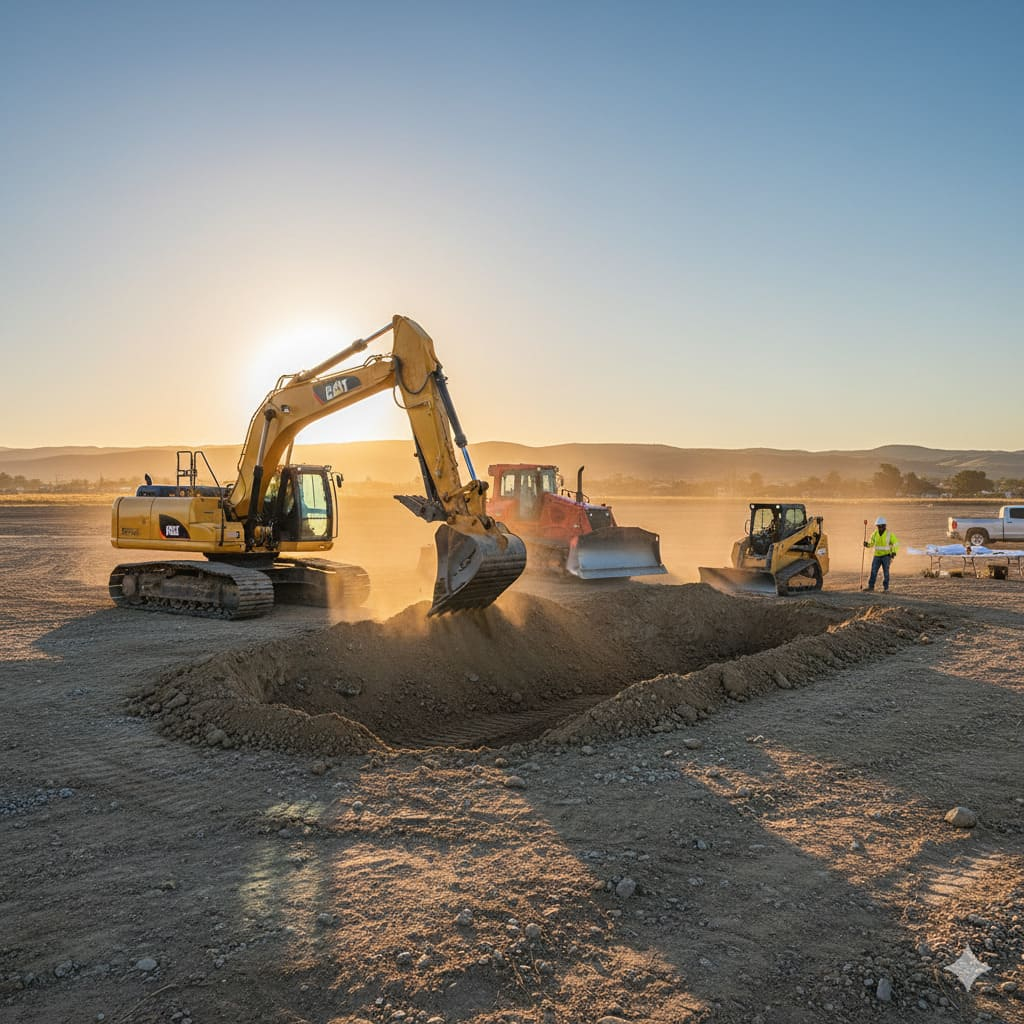
This is the back-breaking work. We cannot build on top of grass or topsoil. Topsoil is full of organic matter that will decompose, rot, and shrink over time. We must surgically remove it all.
For a Patio: We excavate down 7-9 inches.
For a Driveway: We excavate down 10-14 inches (to handle the weight of SUVs and Teslas).
Local Context: In the Beach Cities (Hermosa, Manhattan, Redondo), we are often digging in pure sand. While easy to dig, it creates access challenges. We use specialized narrow-access equipment to get into tight backyards without damaging your property.
The Slope: We also use this step to establish our “grade.” We ensure the excavated area slopes away from your home’s foundation (usually 1/4 inch per foot) to protect your home from water damage during our winter storms.
This step is critical for South Bay homeowners. If you live in an area with sandy soil, your ground is “soft.” If we dump gravel directly onto sand, over time, the heavy gravel will sink down into the sand, causing your driveway to rut.
The GAGA Standard: We install a layer of heavy-duty Geotextile Fabric (often called stabilization fabric) at the bottom of the excavated pit. This fabric acts like a hammock. It separates the native soil from our new gravel base, ensuring they never mix and the base never sinks. Most budget contractors skip this $300 step, costing you thousands later.
This is the true foundation. We import tons of Class 2 Recycled Road Base. This is a mixture of 3/4-inch crushed rock and “fines” (stone dust).
Why this mix? The jagged rocks lock together, while the dust fills the voids. When compacted, it becomes almost as hard as concrete, but it remains flexible enough to withstand earthquakes without cracking.
We cannot just rake the gravel flat. We must remove the air pockets.
We use a heavy-duty industrial Vibratory Plate Compactor to pound the gravel.
The “Lift” Method: We never dump all 6 inches of gravel at once. We do it in “lifts” of 2-3 inches. We spread 3 inches, compact it, add 3 inches, and compact again.
This ensures the base is rock-solid all the way to the bottom, not just on the surface.
On top of that hard-packed gravel, we spread a precise 1-inch layer of coarse concrete sand.
Note: We do not use beach sand! Beach sand is round (like marbles) and will roll. We use “angular” sand that locks together.
Expert Tip: We do not compact this sand yet. We use long metal pipes and a straight board to “screed” (smooth) this layer until it is glass-smooth. This is the soft pillow that the pavers will sit on.
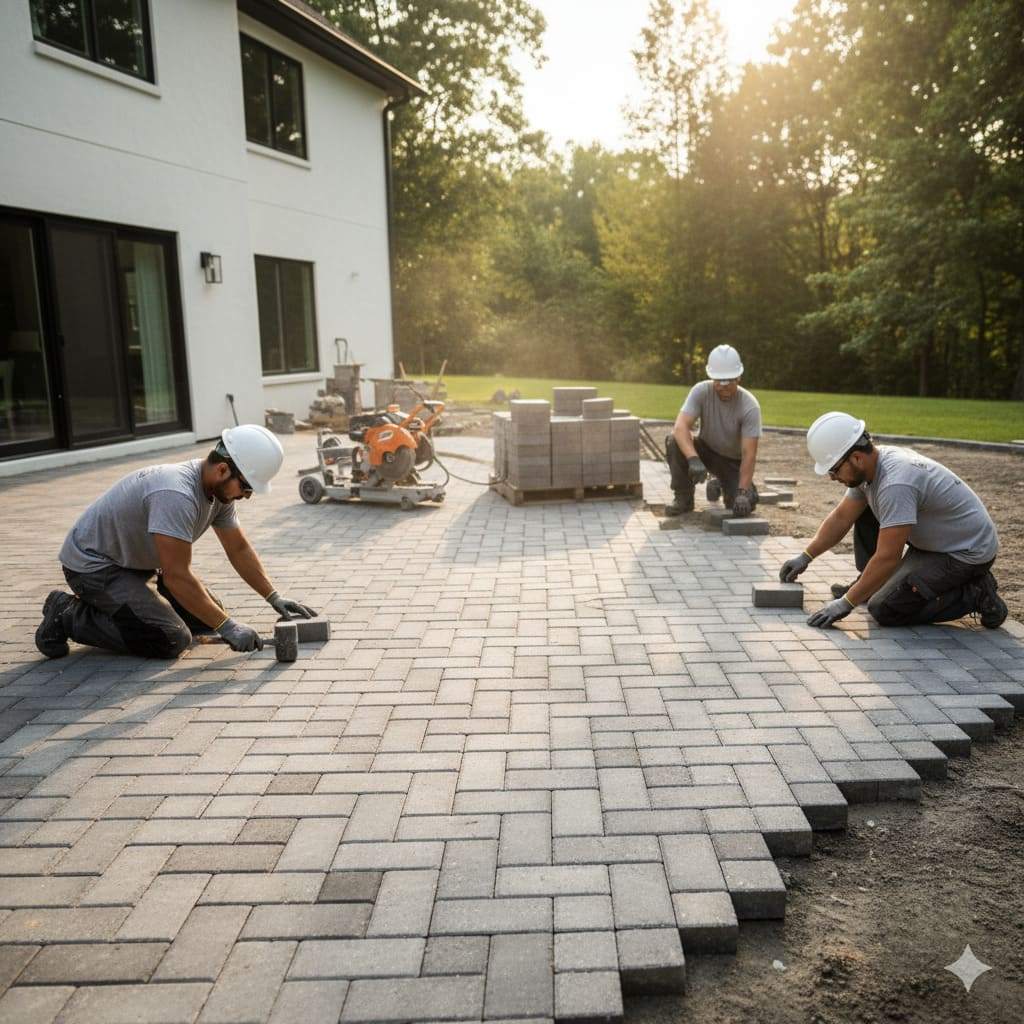
Now, the fun part. We lay the pavers in your chosen pattern.
The Pattern Matters: For driveways, we often recommend a Herringbone pattern. The 45-degree angles interlock the stones tightly, preventing them from shifting under the torque of turning car tires.
The Frame (Edge Restraints): Before we finish, we must install the “frame.” Without a border, the pavers on the edge will slowly “creep” into your lawn, opening up ugly gaps.
GAGA Approach: In soft soil areas, we often prefer a Concrete Bond Beam—a hidden wedge of concrete buried underground that cements the border pavers in place forever. It is far superior to the plastic spikes used by many competitors.
The job isn’t done! The pavers are still “floating” on the sand bed. To lock them into one single, monolithic surface, we use Polymeric Sand.
This is a high-tech sand mixed with dry polymers (binding agents).
We sweep the sand into every joint.
We run the plate compactor over the top of the pavers. This vibrates the sand deep down into the cracks and settles the pavers into the bedding sand.
Activation: We gently mist the patio with water. This activates the polymers.
The Result: Within 24 hours, the sand hardens into a flexible, rubber-like grout. It locks the pavers together, prevents water from washing out the base, and—most importantly—blocks weeds and ants.
This is a common question. Weeds do not grow up from the 10 inches of compacted rock below (nothing can survive that).
Weeds grow down. Seeds blow in from your garden, land in the cracks, get a little water, and sprout. An old patio with plain/cheap sand in the joints is a perfect “planter” for weeds.
This is why Polymeric Sand is a non-negotiable standard at GAGA US Construction. It creates a solid, impenetrable barrier that seeds cannot root into.
Many South Bay cities (especially Manhattan Beach and Santa Monica) have strict “lot coverage” rules to limit rainwater runoff. They may tell you that you cannot pave your whole driveway because it covers too much soil.
The Solution: We can install Permeable Pavers. These are installed with a slightly different base (using open rock instead of road base) that allows rainwater to drain through the pavers and back into the earth. This satisfies city codes and is great for the environment. Ask us if this is right for your project!
Q: Can you just lay pavers over my old concrete patio? (The “Overlay” Method) A: We strongly advise against this. Your old concrete has cracks. As the ground moves, those cracks will transfer right up through your new pavers (a process called “reflective cracking”). Furthermore, overlaying raises the height of your patio, which can block door thresholds or cover weep screeds on your stucco, leading to rot. The only correct way is to demo and remove the old concrete first.
Q: How long until I can walk on my new paver patio? A: Immediately! That is the beauty of pavers (unlike pouring concrete, which needs days to cure). You can walk on it the moment we leave. However, avoid pressure washing for 30 days to allow the polymeric sand to fully cure.
Q: Do I need to seal my pavers? A: In the South Bay, Yes. We recommend sealing. The salt air near the ocean is corrosive and can fade the color of concrete pavers over time. A good sealer enhances the color (giving it that “wet look” if desired) and protects against salt, oil drips, and BBQ grease.
Q: Is paver installation a good DIY project? A: Honestly, it is one of the most physically demanding DIY projects you can attempt. The technical skill is not in laying the stone, but in the excavation and grading. Renting a 200-lb plate compactor, disposing of 5 tons of dirt, and getting the slope perfect for drainage is much harder than it looks on YouTube. One mistake in the base = a ruined patio in 12 months.
A paver patio is a system. When you get a quote, look at the details. If a contractor gives you a price on the back of a napkin without measuring slope or mentioning base depth, run.
A cheap bid almost always means they are skipping the excavation, the geotextile fabric, or the compaction. You will pay for those savings in three years when you have to tear it all out.
At GAGA US Construction, we build for the South Bay lifestyle. We build bases that withstand our sandy soil and our active lives.
Ready to upgrade your curb appeal? Contact us today for a consultation. We’ll show you exactly how we build the strongest base in the business.
Your Newport Beach Backyard oasis Awaits ADU, Deck, Patios, Fencing & Turf Get a Free Qoute Table of Contents Table
Your Newport Beach Backyard oasis Awaits ADU, Deck, Patios, Fencing & Turf Get a Free Qoute Table of Contents Table
Your Newport Beach Backyard oasis Awaits ADU, Deck, Patios, Fencing & Turf Get a Free Qoute Table of Contents Table

GAGA US INC is a licensed (#1074874 – B, C13) General Building Contractor based in Los Angeles. GAGA US works with professional contractors to ensure your construction needs are fully met and executed promptly.